Viksit Bharat 2047
The Indian construction equipment market has seen an unprecedented growth since 2019 after the government of India announced the National Infrastructure Pipeline (NIP) with an outlay of Rs. 111 trillion (revised to Rs.168.93 trillion). Also, mega projects like Bharatmala Pariyojana and Smart Cities Mission have been undertaken to lay the infrastructure foundation of Viksit Bharat in 2047.
Indian Construction Equipment Market
The Indian construction equipment market is reportedly growing at a CAGR of around 8% and expected to reach USD 9.24 billion in 2026 and USD 13.61 billion by 2031. Western India accounts for about 20% of the national market with Gujarat a key regional market alongside Maharashtra, Tamil Nadu, and Karnataka.
Ahmedabad will host the 2030 Commonwealth Games
Hosting the centenary edition of this event in Gujarat will give a massive fillip to the growth that is already driven by government-led projects notably the Special Investment Regions (SIRs) including the Dholera SIR, Dholera international Airport and the mega national projects like Dedicated Freight Corridor (DFC) and Delhi Mumbai Industrial Corridor (DMIC). Rapid urbanization and industrialization of Tier II and III cities and the high market receptivity to adoption of latest technology are major growth drivers.
A Legacy in the Making
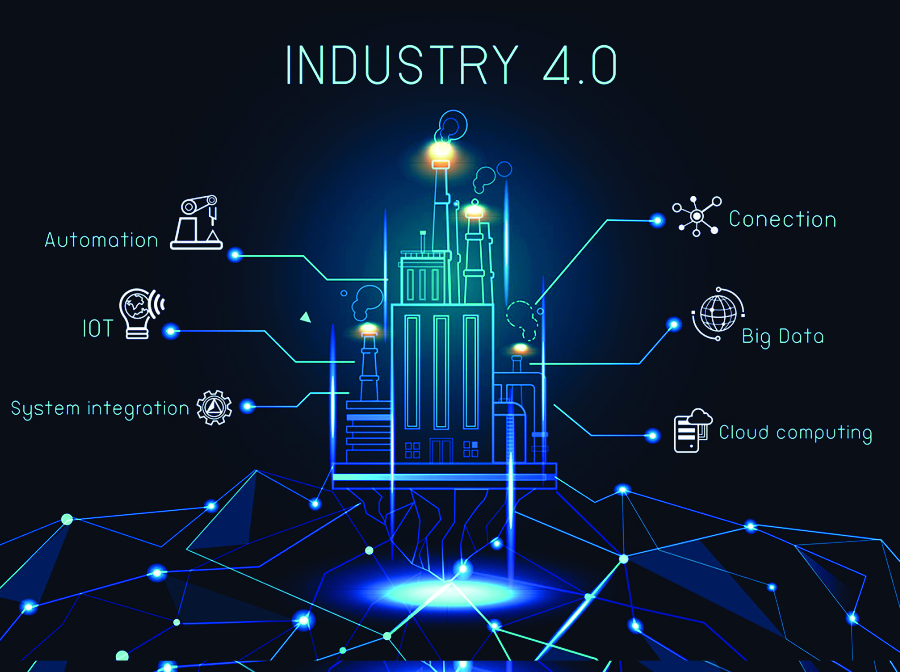
In this context, the trade show will create ample business opportunities for local, national and international players particularly for companies focused on industry trends like smart Industry 4.0 solutions, hybrid/electric machinery and rental models. The comprehensive exhibition intends to cover all types of construction machinery & vehicles, mining machines, building material machines as well as raw materials.
Exhibitors
Visitors
Estimated business
generation
| Task specific machinery | With robotic systems to optimize performance for niche applications |
| IoT-enabled predictive maintenance | With IoT-enabled sensors on machinery components to predict failure / safety issues |
| 3D Printing for on-site spare parts manufacturing | Mobile additive manufacturing units for on-site deployment |
| Alternative fuel-powered machinery | Equipment running on hydrogen, biofuels, EV powertrains and hybrid energy to replace diesel-powered machinery |
| Autonomous construction vehicles | AI-driven, fully autonomous bulldozers, loaders, and haulers for large-scale projects |
| Carbon capture-integrated equipment | Large-scale machinery with onboard carbon capture technology for reduced emissions at source |

Foundries
of India’s cast iron
production
CAGR
Workers
skilled / semi-skilled
direct / indirect
India is the second-largest producer of castings globally & Indian foundries have captured 12% global market share in automotive castings through competitive pricing and quality improvements.

Major Hub of Investment Casting – While it is a stronghold of traditional methods, Rajkot is also emerging as a major hub of Investment Castings. Rajkot contributes ~15% to the Indian market of Investment Castings estimated at INR 4,000 crore (USD 480 million) and expected to grow at 12% CAGR over the next five years.
Technological Advancements like 3D printing for pattern making/prototypes, automated molding systems based on AI mold-fill simulation, robotic ladles and vibratory shakeouts, automated core shooters, AI powered, IoT enabled defect detection, blockchain carbon tracking. advanced metallurgy, are increasingly being adopted with use of modern tools like 3D scanning and CAD programs, spectrometers, IoT sensors and predictive maintenance. Gujarat Foundry Policy offering subsidies on green technology has led to investment in electric arc furnaces.
Specialized Services such as machining, heat treatment, surface finishing, and assembly operations enable customized casting solutions ranging from small precision components to large industrial machinery parts weighing several tons. The Rajkot market serves diverse end-user industries like Automotive (30%), Industrial Machinery (25%), Construction (20%), Energy (15%).
Hybrid Materials like Austempered Ductile Iron (ADI), non-ferrous metals like aluminium, copper, zinc, and other specialty alloys for critical sectors.
Environment Compliance e.g. in emission control systems through bag filters and zero discharge plants. Sustainable manufacturing practices like, 90% scrap recycling rates, solar powered melting to reduce CO2 and promotion of inclusivity through training of women
Quality Standards: International certification compliance has improved significantly with most of export-oriented foundries achieving ISO 9001 and TS 16949 certifications.
Energy Efficiency: Implementation of energy-efficient melting technologies has reduced power consumption by 25-30% in modernized facilities
Skilled Workforce: Industry-academia partnerships have enhanced technical skills with specialized foundry engineering programs in major technical institutes
Raw Material Security: Strategic partnerships with mining companies and scrap metal suppliers have improved supply chain reliability and cost management
AMTS is dedicated to showcasing the frontier technologies driving the smart manufacturing revolution in India. The show connects Indian manufacturing with solution providers of digitalisation in manufacturing. The gathering includes industry leaders, MSMEs and policy makers.
AMTS serves as a catalyst for technology adoption, innovation and indigenization.

|
10
Editions
|
3000+
Exhibitors
|
|
4,25,000+
Visitors
|
$20+ Million
Business Turnover
|
• Ai & I4.0 Enabled Manufacturing
• Supply Chain / Logistics Automation
• Quality Control
• Robotics
• Safety & Cybersecurity In Smart Factories

India, brimming with the passionate aspirations of its youthful billions and led by a visionary political leadership, when presented with the once-in-generations opportunity at a historic inflection point in its national economic progress has eagerly embraced the disruptive but transformative path of the fourth industrial revolution or Industry 4.0.
In fact, it was the only way forward and failure to adopt frontier technologies meant not only huge potential economic losses but also loss of sovereignty and technological dependence on other nations.
The Union Budget 2025-26 announced the National Manufacturing
Mission with five key focus areas: ease and cost of doing business; future ready workforce for in-demand jobs; a vibrant and dynamic MSME sector; availability of technology; and quality products.
NITI Aayog drew a 10 year (FY 2026- FY 2035) strategic roadmap with a comprehensive set of interventions to create a future-ready, frontier technology-enabled manufacturing ecosystem that would drive India’s transformation into a global leader in manufacturing by 2035.
Four frontier technologies that are disruptive, actionable, scalable, and aligned to India’s long-term manufacturing vision –Artificial Intelligence and Machine Learning, Advanced Materials, Digital Twins, and Robotics – have been identified for focused deployment in five core clusters incorporating thirteen high impact sectors. (Source: NITI Aayog – Reimagining Manufacturing: India’s Roadmap to Global Leadership in Advanced Manufacturing, Oct ’25)
This gives the nation a real chance to increase the share of manufacturing in GDP from 13.89% in 2024-25 (Source: MoSPI) to 25% by 2035, establish itself as one of the top three global hubs for advanced manufacturing, and realize the vision of Viksit Bharat 2047.
As global competition accelerates, there is the highest sense of urgency. China, South Korea, and Vietnam already have the percentage contribution of manufacturing to GDP that India aspires for.
• Smart Manufacturing
• Factory Automation
• Field Instrumentation
• AI-Driven Manufacturing Solutions
• Robotics
• Industry 4.0 Platform
• Industrial IoT Systems
• Quality Automation & Inspection Technologies
• Intelligent Machine Tools & Smart Tooling
• Logistics Automation
• Electrical Automation
• Additive Manufacturing
• Manufacturing Software & Analytics
• Cyber security
Aiming to enhance global competitiveness of Indian manufacturers,
the Ministry of Heavy Industries initiated SAMARTH Udyog Bharat 4.0
with the Vision: ‘To facilitate and create eco system for propagation of
Industry 4.0 set of technologies in every Indian manufacturing by
2025, be it MNC, large, medium or small scale Indian company.’
(Source: samarthudyog-i40.in). To hand-hold enterprises during this
transformation, five Common Engineering Facility Centers (CEFC)
were established:
1. Center for Industry 4.0 (C4i4) Lab, Pune
2. IITD-AIA Foundation for Smart Manufacturing, New Delhi
3. I4.0 India at IISc Factory R&D Platform, Bangaluru
4. Smart Manufacturing Demo & Development Cell
at CMTI, Bengaluru
5. Industry 4.0 projects at DHI CoE in Advanced Manufacturing
Technology, IIT Kharagpur

• Aerospace and Defence
• Automotive and Auto Components
• Pharmaceuticals
• Medical Devices
• Biotechnology
• Engineering & Capital Goods
• Textiles & Apparels
• Chemicals & Petrochemicals
• Electronics System Design & Manufacturing
• Leather and Footwear
• Food Processing
• Gems & Jewellery
• Marine & Shipping
• Railways
• Construction
• New & Renewable Energy
• Metal Industry (Ferrous & Non-Ferrous)
• Oil & Gas, Refineries
• Food Products
• Cement, Glass
• Plastic and Packaging
• Paper and Pulp Industry
• Engine & Turbine
• Power Transmission Equipment
• Semiconductors
• Consulting
• Government and Industry Bodies
Farm to Fashion is a premier platform that brings together the entire textile ecosystem, from raw materials to finished fashion, offering unmatched opportunities for Business growth, collaboration and innovation.

The exhibition highlights India’s ability to offer a fully integrated textile value chain within one ecosystem, strengthening industry connections and accelerating growth across every stage of production and trade.
The textile sector is the second largest source of employment in India after agriculture and Gujarat stands at the heart of this growth. The state of Gujarat has long been a cornerstone of India’s industrial and manufacturing strength, with textiles forming one of its most dynamic and historically rooted sectors.
Known as the “Textile State of India” and the “Denim Capital of India”, Gujarat has built a robust ecosystem that spans the entire value chain – from cotton cultivation and fibre production to fabric processing, garment manufacturing and technical textiles.
With abundant raw material availability, strong infrastructure and strategic access to ports, the state enables seamless domestic distribution and global exports. Gujarat contributes significantly to India’s textile output and expos, supported by leading textile hubs such as Surat and Ahmedabad, which are internationally recognized for synthetic fabrics, denim and textile processing.
| Key Textile Policy Trends and Initiatives | |
|---|---|
|
Gujarat Textile Policy 2024 It is aimed at making the state a technical textile hub. |
National Schemes (2025-26 Focus) |
| Capital Subsidy: 10% to 35% based on operation type. | PM MITRA Parks: Development of 7 mega parks for integrated, world-class infrastructure. |
| Interest Subsidy: 5% to 7% per annum for 5-8 years. | Production Linked Incentive (PLI) Scheme: Targeted at MMF fabric, apparel, and technical textiles to enhance competitiveness. |
| Power Subsidy: ₹1 per unit for 5 years. | National Technical Textiles Mission: Focuses on research, innovation, and market development. |
| Labor Support: Payroll assistance of ₹2,000–75,000 per worker/month. | SAMARTH Scheme: A skill-building program with placement orientation. |
| Focus Areas: Encourages technical textiles, garmenting and sustainability. | |
With a strong focus on technical textiles, sustainable manufacturing and global market integration, Gujarat is positioning itself as a future-ready textile hub, driving
economic growth while creating large-scale employment opportunities and empowering communities across the state.
Government Textile Policies and Initiatives
PM MITRA Park, Navsari
Technical Textiles
Sustainable Manufacturing
Fashion Innovation
Special Focus: Sustainable Textiles in Fashion
Grand Multi-Sector Textile Exhibition
Theme-based Industry Pavilions
B2B and B2G Meetings
Vendor Development Programs
Buyer-Seller Meets
Live Fashion Showcase
As the fourth largest economy racing to be the third largest by 2027, the focus of India today is manufacturing for India and the world. Consequently, the country is on a mission mode to producing and acquiring the cutting-edge technologies of the day. This is also reflected in the new National Manufacturing Mission, announced in the Union Budget 2025-26.
FDI, establishment of manufacturing base in India with TOT (transfer of technology) are key considerations of India’s foreign policy today.
While the Global Capability Centres in India (more than half of the world’s total and about 1900 presently) are driving global innovations in GenAI and engineering R&D, the Ministry for Heavy Industries and Public Enterprises has launched SAMARTH Udyog Bharat 4.0 to rapidly transform manufacturing capabilities with Industry 4.0 practices and increase global competitiveness in the capital goods market
Over seventeen editions in three decades, the biennial international tradeshow has today evolved as one of India’s leading exhibitions of manufacturing technology and a trusted platform for all stakeholders of India’s industrial progress – manufacturers of capital goods, end user industries, and policy makers – to meet, interact, take stock and chart the future.
The exhibition is characterized by its large size, scope and outcomes. Held in the capital of one of the leading industrialized states in India, the exhibition covers the entire 1 lakh+ sq. m. exhibition space of one of India’s largest exhibition centres. A full range of engineering and capital goods are displayed with participation from more than 20 countries.
An economy racing toward $6 Trillion GDP by 2027.
A machine tools market valued at $1.5 Billion in 2023, rising at 8.2% CAGR through 2032.
30% growth in consumption, rising to 15,791 crore.
These are not just numbers – they are signs of a nation in motion.
At INDIA MACHINE TOOLS SHOW, this growth is not a statistic but a future unfolding in front of you.
Every industry needs its stage. Blueprints can be drawn in boardrooms, ideas can be imagined in labs, but until they meet the right machines and the right markets they remain unfinished.
This is why INDIA MACHINE TOOLS SHOW exists. It is not a catalogue to flip through, nor a showcase to stroll past. It is a working theatre in progress – where machines perform, where ambition is tested, where partnerships are born.
At INDIA MACHINE TOOLS SHOW, manufacturers don’t just display, they discover. Visitors don’t just observe, they engage. Every conversation carries the weight of years ahead, because the decisions made here are not for today, but for the decade to come.
In an economy surging towards $6 Trillion GDP, with machine tools production and consumption growing at double-digit rates, INDIA MACHINE TOOLS SHOW is the floor where this momentum becomes visible. It is where the blueprint of a nation meets the
From Human Genius in machine making to Artificial Intelligence, and Everything In Between
Showcasing the complete spectrum of manufacturing excellence, from the foundations of human ingenuity to the frontiers of intelligent automation.
Top companies exhibit here because they know their innovations will be seen by the people who matter. Visitors come here because they know they will find the most credible brands and the widest range of technologies under one roof.
From global corporations launching their latest machines to ambitious manufacturers seeking markets, INDIA MACHINE TOOLS SHOW is the trusted meeting ground where brand strength and visitor quality reinforce each other.
India’s industrial rise is built on diversity – the strength of its machine tools, the precision of its instruments, the speed of its automation, and the resilience of its supply chains. INDIA MACHINE TOOLS SHOW reflects this breadth, bringing together the complete spectrum of technologies that fuel Make in India vision.
From global leaders to homegrown innovators, exhibitors at INDIA MACHINE TOOLS SHOW demonstrate the solutions that transform ideas into industries. For visitors, it is a one-stop destination to discover technologies across every segment of modern manufacturing.
INDIA MACHINE TOOLS SHOW has a history of performance backed by strong participation and tangible outcomes. Each edition has reinforced its position as one of India’s most credible platforms for the machine tools and manufacturing sector.


After 10 groundbreaking editions of the Vibrant Gujarat Global Summit, the Government of Gujarat now brings the vibrancy to your region.
The Vibrant Gujarat Regional Exhibitions (VGRE) are curated platforms held alongside the Regional Conferences (VGRC) across four distinct zones of the state, each showcasing the industrial might, cultural wealth, and entrepreneurial spirit of its region
Gujarat stands as a powerhouse of India’s economic and industrial landscape. With a legacy of entrepreneurship and a forward-looking growth model, Gujarat has consistently led the way in shaping India’s development story.
Its GSDP is projected to reach ~USD 630 Bn by FY 29-30 growing at a decade-long CAGR of over 14%. In FY 2024-25, Gujarat recorded merchandise exports worth USD 116 billion, accounting for approximately 27% of India’s total merchandise exports, reinforcing Gujarat’s status as a global trade powerhouse.
Gujarat has established itself as a national leader in diverse sectors including Auto Textiles & Apparels, Gems & Jewellery, and Chemicals & Petrochemicals, among others. The state’s economic presence is expansive and multifaceted, from holding the distinction of being India’s petroleum hub to leading the world in diamond polishing, with 8 out of 10 diamonds being polished in Surat. Gujarat also accounts for close to 70% of India’s denim production, reinforcing its stature as a dominant force in the textile industry.
The rise of Rajkot over the last two decades as a major Indian manufacturing hub integral to global supply chains is truly a remarkable story.
The Rajkot machine tools industry has played a pivotal role in this rise. From being an importer of technology at the turn of the century to becoming an exporter of most sophisticated CNC machine tools to advanced countries today, the growth of the local machine tools industry has been exemplary and a source of inspiration for all other industries in the region. It is a truly representative example of ‘Make in India’ and becoming ‘Atmanirbhar’.
The increasing local availability of advanced machine tools fuelled the growth of all engineering industries in the entire region like manufacture of bearings, diesel engine, auto components etc.
Since 2006 and over nine editions, the trade show has played a crucial role in the industrial progress of the region. It has served both as a marketing platform for the regional industry as well as a showcase of world-class technology. In this way, the exhibition has enabled indigenization and adoption of advanced technology.
The trade show is now jointly organized by the apex body of the local machine tools industry, the Machine Tools Manufacturers Association – Rajkot, and K and D Communication Limited.
This tenth edition is primed to outclass the success of all previous editions.
The concurrent Castings & Foundries Expo provides an excellent marketing platform to the 500+ local foundries. The exhibitors in this show will have the unique opportunity of being with more than 300+ manufacturers from the engineering sectors as captive audience within the venue as exhibitors in the concurrent Rajkot Machine Tools show!


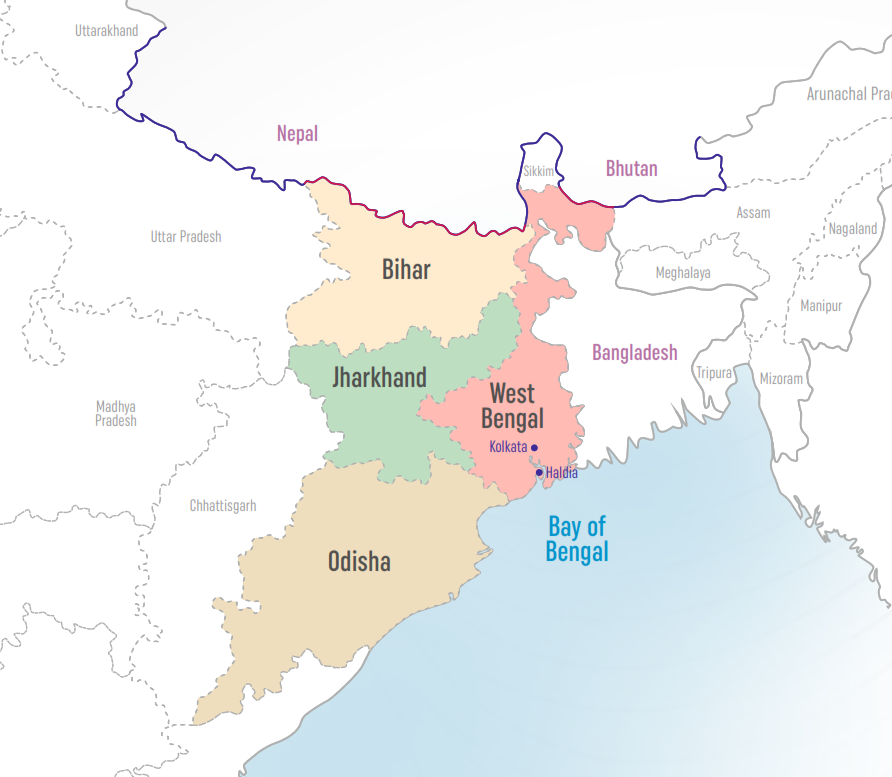
Providing access to states of Eastern India, Northeast, land-locked states of Central & Northern India, adjoining countries Nepal, Bhutan, Bangladesh as well as the Southeast Asian markets through ports like Kolkata and Haldia.
Kolkata’s unique strategic geographical advantages likely led Job Charnock, the British merchant representative of the British East India Company to reportedly found the city of Calcutta (former anglicized name) in 1686 after amalgamating the three large villages of Sutanuti, Gobindpur, and Kalikata along the east bank of the river Ganges.
From 1772 to 1911, Calcutta remained the capital of British India.
In 1947 at the time of India’s Independence, West Bengal was one of the most industrialized states of India.
Today, West Bengal is in the midst of an industrial renaissance and leading the industrial development of Eastern India.
With long-established leadership in steel, mining, coal, and heavy industries, eastern India is now transforming into a manufacturing hub.
During the last decade (2014-15 to 2024-2025), Manufacturing saw significant increase in GSVA (at current prices) of states of eastern India:
| State | 2014-15 (Rs. In lakhs) |
2024-25 (Rs. In lakhs) |
% Increase |
|---|---|---|---|
| West Bengal | 7,162,103 | 21,593,780 | 302 |
| Odisha | 4,724,215 | 19,332,886 | 409 |
| Source: MoSPI | |||
Jharkhand, Chhattisgarh and Bihar also nearly doubled their Manufacturing output.
West Bengal contributes one-fifth of the country’s net value added in engineering, worth about $7.1 billion and exports engineering goods valued at $1.8 billion annually (Source: wbindustries.gov.in).
Odisha is not only the steel capital of India it is also its top aluminum producer with large downstream manufacturing industries. Power, Petrochemicals & Chemicals, Food Processing, Biotechnology & Pharmaceuticals, Textiles & Apparel are other surging industries.
Jharkhand while leading in steel, mining, power and cement industries due to its rich mineral deposits, is also fast emerging as a new citadel for the automobile and auto components industry. It supports many ancillary and tool manufacturing industries.
Chhattisgarh with rich mineral deposits hosts India’s largest steel plant in Bhilai and key sectors include power generation, cement, aluminium, and textiles.
| Product | ||
|---|---|---|
| Iron and Steel along with its Products | Industrial Machinery | |
| Non-Ferrous Metals and Products | Air Conditioning and Refrigeration Machinery and Parts | |
| Electric Machinery and Equipment | Accumulator and Battery | |
| Auto Components/Parts | Aircrafts, Spacecraft and Parts | |
| Railway Transport and Parts | Cranes, Lifts & Winches | |
| Construction Machinery | Hand Tools, Cutting Tools and Implements made of metals | |
| Machinery for ATMs, Injection Moulding machinery, valves | Nuclear Reactors, Industrial Boilers and parts | |
| Medical and scientific instruments | ||
| Source: wb.gov.in | ||
Amid this momentum of manufacturing growth, the Kolkata Machine Tools Show 2026 will showcase cutting-edge technologies in machine tools and a host of engineering products essential to the manufacturing process.
The exhibition will highlight modern manufacturing with automated systems, smart machines and data driven decision-making. It will showcase solutions driven by technologies like robotics, 3D printing, AI, IoT, machine learning, blockchain, augmented reality, digital twins and advanced sensors.
The tradeshow will display the research & development of industry leaders alongside the innovations and indigenization of startups and MSMEs. It will bring together all stakeholders in eastern India’s manufacturing growth and strategic industrial planning.

The Castings and Foundries Exhibition 2025 is the premier platform where tradition meets innovation in metal casting. From time-honored techniques to cutting-edge advancements, this event brings industry leaders together to explore new technologies, forge partnerships, and shape the future of manufacturing. Don’t miss your chance to be part of the industry’s most influential gathering.
Ahmedabad, Gujarat’s largest city, hosts a major industrial cluster with 23,000+ MSMEs and 500 medium & large units. The 600 foundries include 450 operational units, with 70% using coke-based cupolas and the rest using induction and pit furnaces. Some also utilize natural gas-fired furnaces. Key industrial areas include Naroda, Odhav, Vatva, Tribhuvan, and Rakhial. These foundries produce 1,770 tonnes of castings daily, contributing 6% of India’s total output, primarily for textile machinery (50%), pumps & valves (20%), agricultural machinery (10%), and sanitary equipment (10%), employing 30,000 people.

We are inviting leading sourcing teams for Railway, Auto, Tractor, Power Train and other casting user industries…